I was in the middle of a rainy Thursday night, the kind where the clouds are so low you can almost taste the humidity, when my roommate dared me to create a ramen that could make even the most stubborn noodle snob weep with joy. I stared at my pantry, the only thing that screamed back at me was a lone can of coconut milk gathering dust beside a jar of red curry paste that had been waiting for a purpose. The kitchen was a symphony of clanking pans and the low hum of the fridge, and I could already hear the sizzle in my head before I even turned on the stove. I thought, “What if I combine the comforting silk of coconut with the bold, peppery kick of curry, and then wrap it around ramen noodles that are traditionally Japanese? Could that be the ultimate comfort‑food mash‑up?”
The first aroma that hit me was the sweet, nutty perfume of coconut milk meeting hot oil – it was like a tropical sunrise spilling over a city skyline. I could see the steam curling up in lazy spirals, hear the gentle pop of garlic as it hit the pan, and feel the heat radiating from the pot like a warm blanket. The broth turned a golden‑amber hue, and when I ladled it over the noodles, the whole kitchen seemed to inhale the scent, as if the walls themselves were tasting the dish. The first spoonful? It coated the ramen strands like velvet, delivering a buttery mouthfeel that made my taste buds do a little happy dance.
Most recipes for coconut curry ramen either drown the noodles in a soupy mess or leave the curry flavor as a faint whisper. I’ve tried those bland attempts that leave you wondering if you accidentally made a coconut milk latte instead of a soup. This version, however, is a meticulously balanced orchestra where every ingredient has a solo, yet they all sing together in perfect harmony. The secret? A splash of lime at the end that brightens the broth, and a quick flash‑fry of tofu that adds a crunchy contrast to the silky soup. The result is a bowl that feels both exotic and familiar – a culinary hug you can’t resist.
I’m about to walk you through each step, from the moment you open that coconut milk can to the final garnish that makes the bowl look like a work of art. By the end, you’ll be able to brag that you’ve mastered a ramen that could convince even the most die‑hard ramen purist to swap their pork broth for this coconut curry masterpiece. Let me walk you through every single step — by the end, you'll wonder how you ever made it any other way.
What Makes This Version Stand Out
- Flavor Fusion: The marriage of coconut milk’s creamy richness with red curry’s fiery depth creates a taste that’s both comforting and adventurous, a rare combo that satisfies cravings for both soup and spice.
- Texture Play: Silky broth, springy ramen, and a crisp tofu finish give you three distinct mouthfeels in every bite, keeping the palate engaged from first slurp to last spoon.
- Simplicity: Only ten core ingredients, all pantry‑friendly, mean you don’t need a specialty store trip – just a quick run to the Asian aisle and you’re set.
- Unique Twist: The dash of lime and a sprinkle of fresh cilantro add a bright, herbaceous lift that most coconut‑curry dishes lack, turning a heavy broth into a refreshing experience.
- Crowd‑Pleaser: Whether you’re feeding vegans, meat‑eaters, or picky kids, this dish can be easily customized, making it the go‑to recipe for any gathering.
- Ingredient Quality: Using full‑fat coconut milk and authentic Thai red curry paste ensures depth of flavor that canned soup mixes can’t replicate.
- Speedy Prep: The entire process, from chopping to plating, fits comfortably under a 45‑minute window, perfect for busy weeknights.
- Make‑Ahead Potential: The broth stores beautifully, so you can prep it in advance and simply cook fresh noodles when you’re ready to serve.
Inside the Ingredient List
The Flavor Base
Coconut milk is the heart of this dish, providing a luscious, buttery canvas that carries the curry’s heat without turning greasy. Opt for a brand that lists “full fat” as the first ingredient; the extra fat is what gives the broth its silk‑like finish. If you substitute with light coconut milk, you’ll notice a watery texture and a loss of that comforting richness that makes each spoonful feel like a mini‑vacation.
Red curry paste is the spice engine, delivering layers of chilies, lemongrass, galangal, and shrimp paste (or a vegan alternative). A tablespoon is enough to give you a bold kick without overwhelming the coconut’s sweetness. Should you crave extra heat, add a pinch of chili flakes later – but remember, a little goes a long way.
The Texture Crew
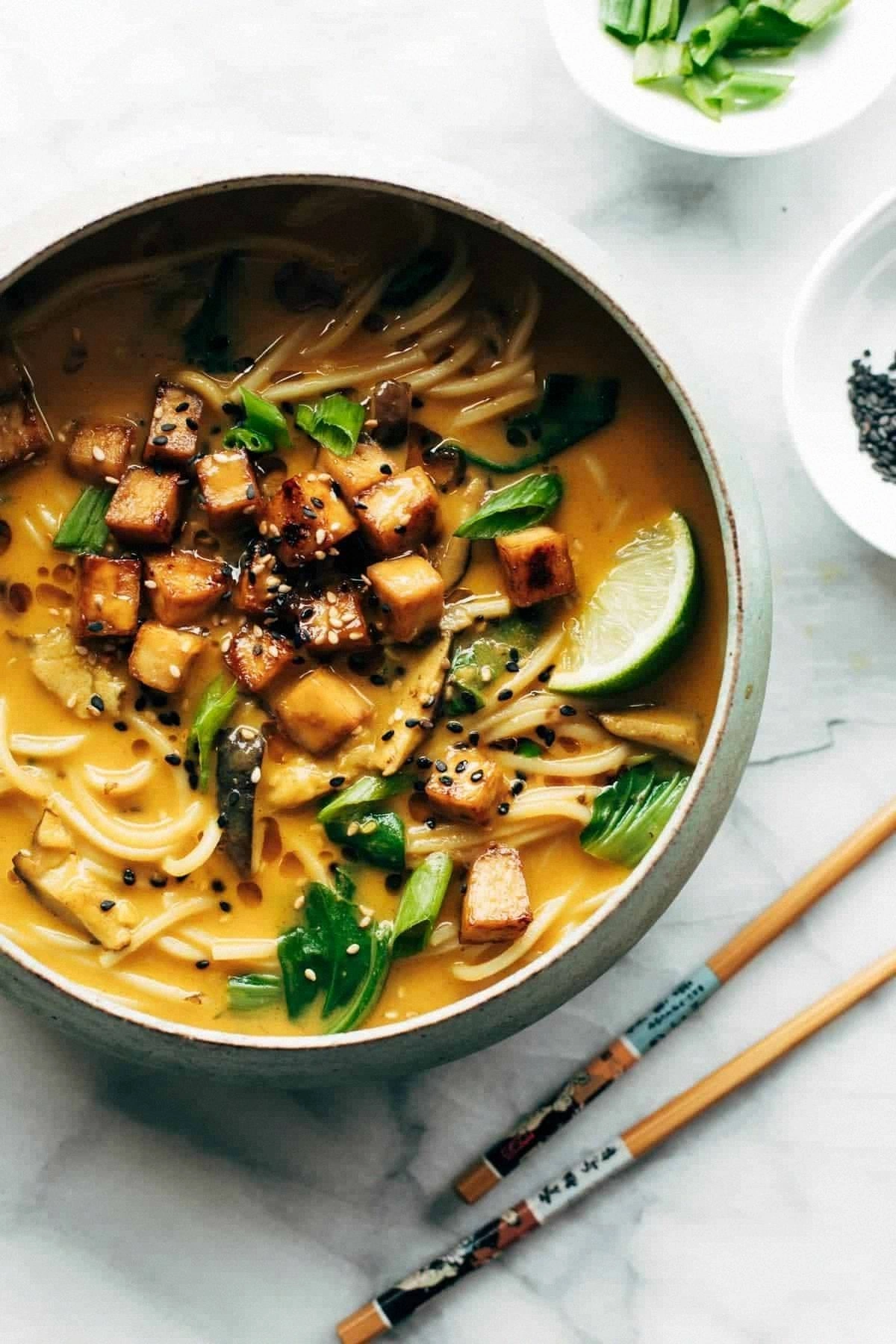
Ramen noodles, preferably fresh, bring that chewy, springy bite that defines a good bowl of ramen. If you only have dried noodles, give them a quick 2‑minute boil before adding to the broth so they stay firm and don’t turn mushy. The tofu cubes, lightly pan‑fried in sesame oil, develop a golden crust that shatters like thin ice when you bite into it, adding a satisfyingly crisp contrast to the velvety broth.
Mushrooms, especially shiitake, contribute an earthy umami that deepens the broth’s complexity. Slice them thinly so they cook quickly and release their juices directly into the soup. If you’re not a fan of mushrooms, swap in sliced bok choy or snap peas for a fresher crunch.
The Unexpected Star
A splash of lime juice at the end is the secret weapon that lifts the whole dish, cutting through the richness and adding a bright, citrusy pop. Fresh cilantro leaves, added just before serving, give an herbaceous perfume that makes the bowl smell like a tropical garden. These two ingredients are often overlooked, but they turn a good ramen into an unforgettable one.
The Final Flourish
Soy sauce and sesame oil are the finishing touches that add depth and a subtle nutty aroma. Use a light soy sauce to avoid over‑salting, and drizzle the sesame oil just before serving for an aromatic lift. A pinch of sugar balances the acidity from the lime, ensuring each spoonful feels rounded and harmonious. If you’re watching sodium, feel free to reduce the soy sauce and add a splash of low‑sodium broth instead.
Everything's prepped? Good. Let's get into the real action…
The Method — Step by Step
- Prep the aromatics. Mince two garlic cloves and grate a tablespoon of fresh ginger. Toss them into a small bowl with the red curry paste, letting the mixture sit for a minute so the flavors can meld. The moment those ingredients meet the heat, you’ll hear a faint sizzle that promises a fragrant foundation. Kitchen Hack: Use a micro‑plane for ginger – it creates fine ribbons that dissolve faster, giving you a smoother broth.
- Toast the curry paste. Heat a tablespoon of sesame oil in a large pot over medium heat. Add the garlic‑ginger‑curry blend and stir continuously for about 45 seconds, until the mixture is aromatic and the oil turns a deep, glossy amber. This step is the moment of truth; if you let it burn, you’ll end up with a bitter broth that no amount of lime can fix. Watch Out: Keep the heat medium, not high – the paste can scorch quickly, turning bitter.
- Introduce the coconut milk. Carefully pour two cups of full‑fat coconut milk into the pot, stirring to combine with the toasted paste. As the liquid hits the hot oil, you’ll hear a gentle hissing sound, and the broth will thicken slightly, turning a luscious golden‑cream color. Bring the mixture to a gentle simmer, then lower the heat to keep it from boiling over. This simmering stage is where the flavors marry; let it cook for 5 minutes, stirring occasionally.
- Season the broth. Add a tablespoon of soy sauce, a teaspoon of sugar, and a splash of lime juice. Taste and adjust: if you crave more heat, sprinkle in a pinch of chili flakes; if you need more salt, add a dash more soy sauce. The broth should taste balanced – sweet, salty, spicy, and bright all at once. Remember, the noodles will absorb some of that salt, so aim for a slightly stronger flavor now.
- Cook the vegetables and tofu. In a separate skillet, heat a drizzle of sesame oil over medium‑high heat. Add the cubed tofu and fry until each side is golden brown, about 2 minutes per side. Transfer the tofu to a plate, then toss the sliced shiitake mushrooms and chopped bok choy into the same skillet, sautéing for 2‑3 minutes until they soften but retain a bite. This quick fry locks in their texture, preventing them from turning soggy in the broth later.
- Boil the ramen noodles. Bring a large pot of water to a rolling boil, add a pinch of salt, and drop in the ramen noodles. Cook according to package instructions, usually 3‑4 minutes, until they’re al dente. Drain the noodles and rinse briefly under warm water to stop the cooking process. The noodles should retain a springy chew that will hold up against the rich broth.
- Combine everything. Add the cooked noodles back into the coconut‑curry broth, stirring gently to coat each strand. Then, carefully drop the sautéed tofu, mushrooms, and bok choy into the pot, letting them warm through for another minute. The broth should bubble gently, and the noodles will appear glossy, as if they’ve been kissed by a silk scarf.
- Finish with fresh herbs. Turn off the heat and sprinkle chopped green onions and cilantro over the top. Drizzle a final teaspoon of sesame oil for an aromatic finish, then give the bowl a quick, gentle swirl. That final swirl? It’s the moment the flavors lock together, creating a harmonious bowl that’s ready to wow.
- Plate and serve. Ladle the ramen into deep bowls, making sure each serving gets a good mix of broth, noodles, tofu, and veggies. Add an extra wedge of lime on the side for those who love a punch of citrus. That sizzle when it hits the pan? Absolute perfection. Serve immediately while the broth is hot and the noodles are still springy.
- That's it — you did it. But hold on, I've got a few more tricks that'll take this to another level…
Insider Tricks for Flawless Results
The Temperature Rule Nobody Follows
Never blast the broth to a rolling boil; a gentle simmer is the secret to a creamy texture. High heat forces the coconut milk to separate, creating an oily layer that looks unappealing and tastes greasy. Keep the pot at a steady 180‑190°F (82‑88°C) and you’ll maintain that silky mouthfeel. I once tried boiling it, and the broth turned grainy – a lesson learned the hard way.
Why Your Nose Knows Best
The aroma is a reliable indicator of flavor development. When the garlic and ginger turn golden and release a sweet, nutty scent, you know the base is ready. If the broth still smells raw after 5 minutes, give it another minute – the fragrance will deepen, signaling that the curry paste has fully infused the coconut milk. Trust your nose over the clock.
The 5‑Minute Rest That Changes Everything
After you combine the noodles with the broth, turn off the heat and let the bowl sit for five minutes. This short rest allows the noodles to absorb more broth, creating a richer, more cohesive bite. Skipping this rest results in noodles that feel separate from the soup, a common complaint I’ve heard from many home cooks. The rest is tiny, but the payoff is big.
Seasoning in Layers
Add salt, soy sauce, and lime at different stages rather than dumping everything in at once. Each layer builds depth, preventing the final dish from tasting flat. For example, a dash of soy sauce in the broth gives a base umami, while a final squeeze of lime brightens the top. This technique is what separates a restaurant‑quality bowl from a kitchen experiment.
Crunch Factor Control
If you love extra crunch, toss the tofu in a light coating of cornstarch before frying. The cornstarch creates a thin, crackly crust that shatters delightfully when you bite. A friend once skipped this step and ended up with soggy tofu – let’s just say the texture was a disaster. The cornstarch trick is a game‑changer for any protein in ramen.
Creative Twists and Variations
This recipe is a playground. Here are some of my favorite ways to switch things up:
Spicy Peanut Ramen
Swap the red curry paste for a tablespoon of peanut butter mixed with a teaspoon of sriracha. The broth becomes nutty, creamy, and has a lingering heat that’s perfect for peanut lovers. Top with crushed peanuts for added texture. This version is a hit for anyone who enjoys Thai‑inspired peanut sauces.
Miso‑Infused Coconut Ramen
Add a tablespoon of white miso paste after the broth has simmered. The miso introduces a subtle umami depth while keeping the coconut’s sweetness intact. Pair with sliced scallions and a soft‑boiled egg for a Japanese‑fusion twist that feels both familiar and novel.
Seafood Splash
Replace tofu with peeled shrimp or scallops. Sear the seafood quickly in garlic‑infused oil, then add them in the last minute of cooking to avoid overcooking. The briny ocean notes contrast beautifully with the coconut’s creaminess, turning the dish into a coastal celebration.
Veggie‑Boosted Green Curry
Use Thai green curry paste instead of red, and add a handful of snap peas, baby corn, and spinach. The green curry offers a fresher, herbaceous profile, while the added veggies increase the nutritional punch. This version feels lighter but still delivers that luxurious coconut base.
Coconut Curry Ramen Burger
Form the cooked ramen into patties, pan‑fry them until crisp, then sandwich between toasted buns with a smear of the coconut‑curry broth as a sauce. Add lettuce and pickled carrots for crunch. It’s a daring, handheld twist that’s perfect for brunch or a fun dinner party.
Storing and Bringing It Back to Life
Fridge Storage
Transfer the broth to an airtight container and store for up to 4 days. Keep the noodles separate; store them in a zip‑lock bag with a damp paper towel to prevent drying out. When ready to eat, gently reheat the broth on low heat, add the noodles, and toss in any fresh veggies you like. This method preserves the broth’s creamy texture without it turning grainy.
Freezer Friendly
The broth freezes beautifully in portion‑size containers for up to 2 months. Leave a little headroom for expansion. Freeze noodles and tofu separately to avoid texture loss. To reheat, thaw overnight in the fridge, then simmer gently and add fresh noodles for the final assembly.
Best Reheating Method
When reheating, add a splash (about 2‑3 tbsp) of water or extra coconut milk to the pot; this creates steam that revives the broth’s silkiness. Heat over medium-low, stirring constantly, until just bubbling. Avoid a rapid boil, as it can cause the coconut fat to separate. Serve immediately for the same velvety experience as the original.