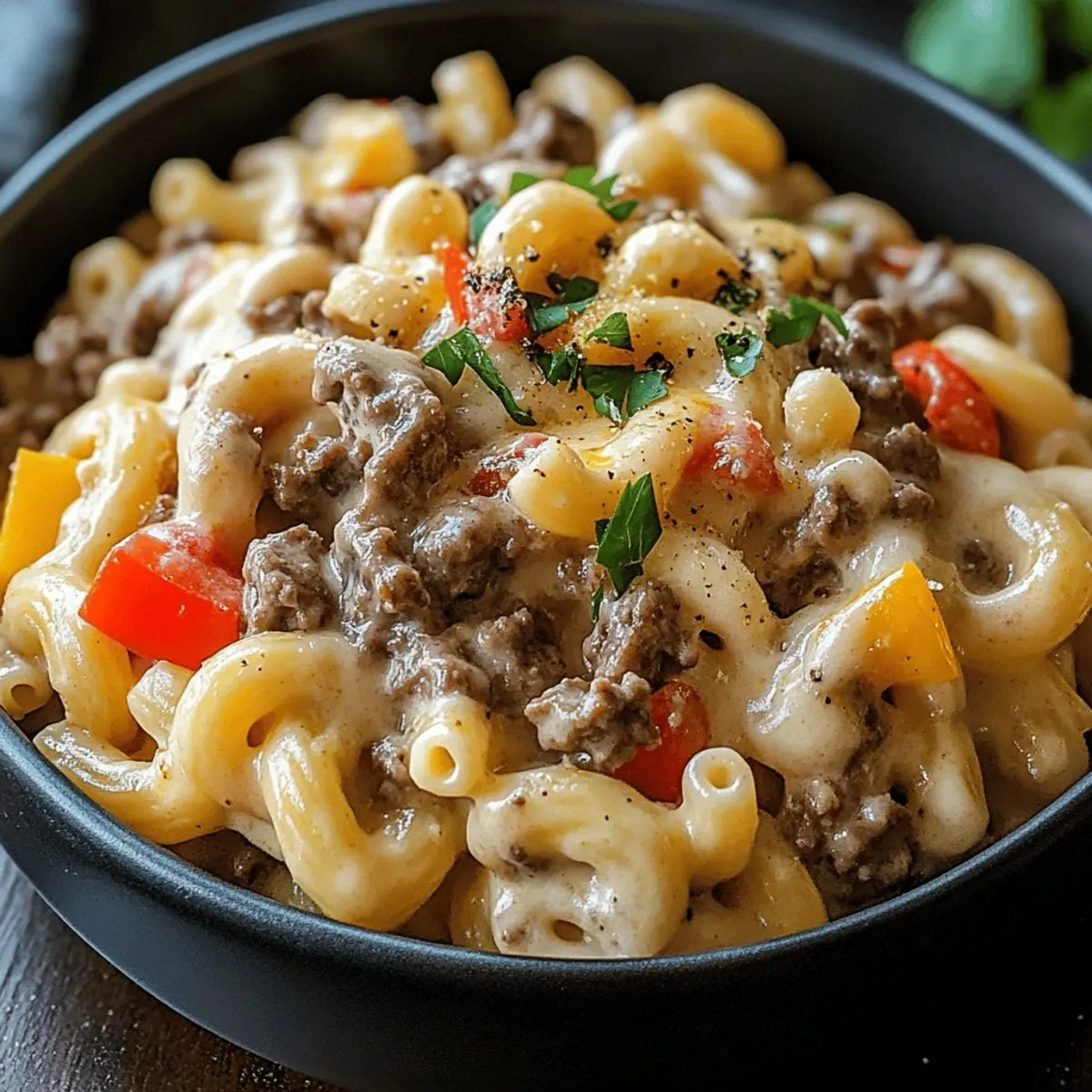
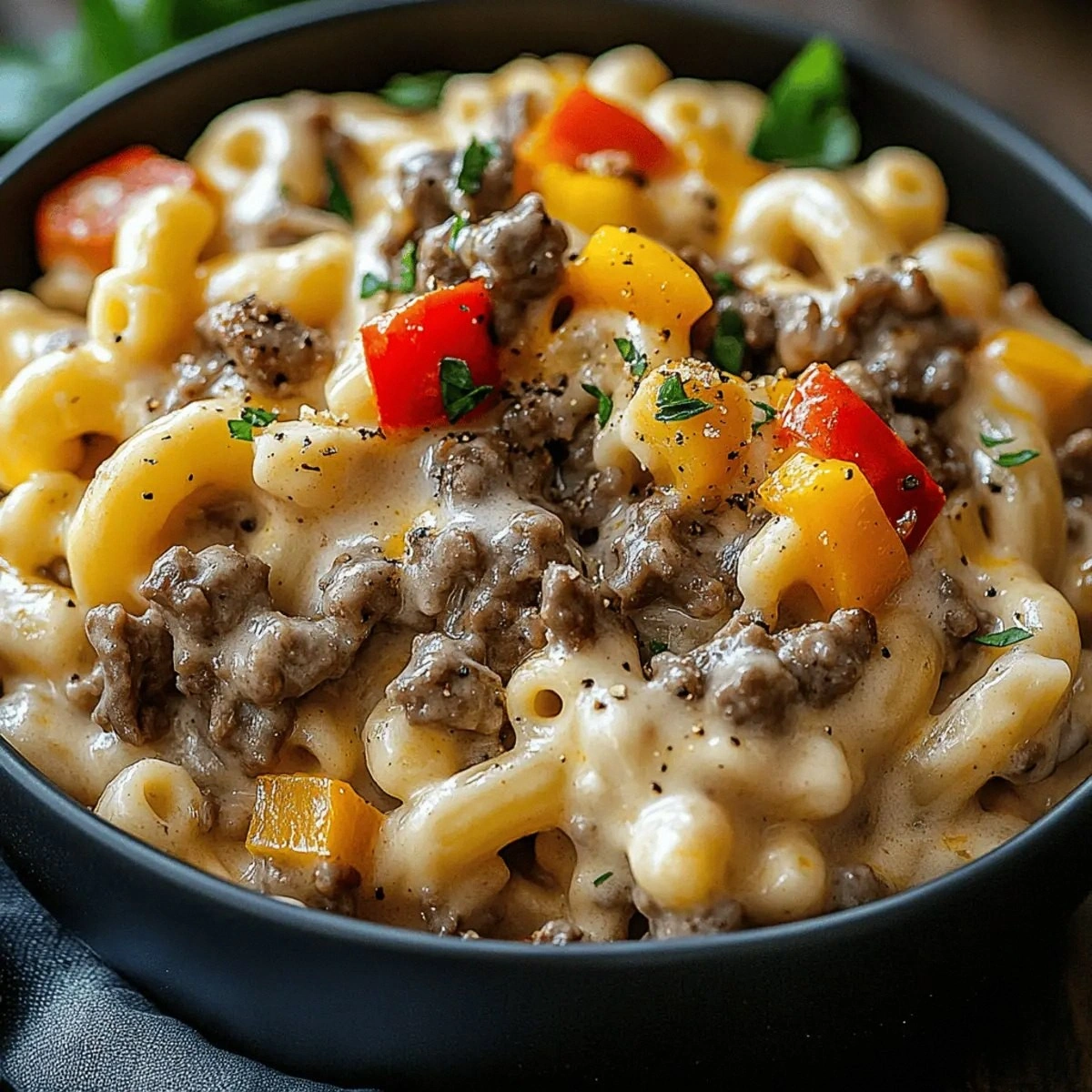
It was 11:47 p.m., the wind was doing that horror-movie whistle against the kitchen window, and I was standing in front of an open fridge in mismatched socks, craving two things with the urgency of a kid who just discovered double-dog dares: the cheesy pull of a Philly cheesesteak and the swaddling comfort of mac & cheese. One Tupperware held last night's roast beef, the other a half brick of cream cheese. My brain did that evil-genius lightning-flash thing. Thirty-five minutes later I was balancing a scorching skillet on a trivet made of yesterday’s mail, twirling a forkful of pasta that tasted like South Street meets Sunday supper, and whisper-screaming “Why is nobody selling this?” to an audience of one very interested cat. That first experimental bite was the edible version of finding cash in old jeans—familiar yet shocking. The steak juices had married the cream cheese into a satin cloak, the peppers had gone jammy-sweet, and the elbows of macaroni had turned into tiny cheese-slinging trampolines. I ate it straight from the pan, standing up, because sitting down would have meant admitting I’d just discovered the best thing I’d ever cooked, and I wasn’t ready for that level of commitment at midnight.
Fast-forward through three more “test runs” (neighbors volunteered as tribute), a near-catastrophic episode involving skim milk instead of cream cheese—do not, I beg you, do not—and a cheese pull that stretched longer than my phone charger cable, and here we are. This isn’t just another “let’s dump steak on pasta” stunt; it’s a blueprint for the richest, silkiest, most outrageously comforting mash-up you can legally create in a home kitchen without a food-truck permit. Picture this: browned beef crumbles that taste like they spent hours basking in onion vapors, three colors of bell peppers so they look like confetti on your screen, and a cream-cheese-based sauce so glossy it could substitute as a ring light. The trick is treating the cream cheese like a liaison, not just a blob to melt and hope for the best. We’re going to coax it, soften it, and season it until it becomes the velvet rope that guides every other flavor into the party.
And here’s the kicker—no roux, no floury aftertaste, no waiting for milk to thicken like it’s stuck in 1995. The pasta’s own starch plus a splash of reserved water do the heavy lifting while you’re grating mozzarella like you’re on a game show timer. If you’ve ever struggled with grainy mac & cheese, you’re not alone—and I’ve got the fix. If you’ve ever thought Philly cheesesteak needs to quit being so sandwich-loyal, you’re also not alone—and we’re about to liberate it. Stay with me here—this is worth it.
Let me walk you through every single step—by the end, you’ll wonder how you ever made it any other way.
What Makes This Version Stand Out
- Velvet-Slide Sauce: Instead of the usual béchamel, we enlist cream cheese and pasta water for a texture that coats each tube like satin sheets on a boutique-hotel bed—no floury lumps, no broken emulsions, just glide.
- One-Pan Steakarama: Everything from browning the beef to finishing the pasta happens in a single heavy skillet, meaning fewer dishes and more of that caramelized fond flavor that most recipes leave behind.
- Pepper Confetti: Using all three primary bell-pepper colors isn’t Instagram vanity; each brings a different sugar-acid balance, so the final bite tastes like a full spectrum of summer even in the dead of February.
- Layered Cheese Strategy: Light cream cheese for body, mozzarella for stretch, and a couple of light cheese slices for that diner-style melt—stacked so you get both pull and pool, never rubbery.
- Spice Dial-In: Paprika for warmth, chili flakes for spark, and a finishing crack of black pepper so you can tailor the heat mid-bite without smothering the beef.
- Make-Ahead Magic: The sauce base can be prepped, cooled, and parked in the fridge for three days; just reheat with a splash of milk and toss with freshly cooked pasta—tastes like you just stood there stirring for thirty minutes.
Alright, let’s break down exactly what goes into this masterpiece...
Inside the Ingredient List
The Flavor Base
Ground beef is the star, but not just any 80/20—go lean here (90/10 or 93/7) so the sauce stays creamy, not greasy. You’ll still get plenty of richness from the butter and cheeses, and the beef’s iron-y depth will concentrate instead of swimming in a pool of orange fat. When it hits the hot skillet, leave it alone for a full two minutes; that’s when the Maillard elves do their dark, crispy magic. Break it up only after the edges have bronzed, then let it keep sizzling until the juices evaporate and you hear the satisfying hiss of meat meeting metal. Skip this patience part and you’ll end up with gray, watery pebbles that taste like cafeteria Tuesday.
The Texture Crew
Butter might seem redundant with lean beef, but that mere twenty grams is your insurance policy against sticking and your ticket to glossy emulsification. As it melts, it foams, lifting the fond into a nutty brown butter note that whispers “steakhouse” without the $45 price tag. Onion, garlic, and the trinity of bell peppers join next, each bringing a different texture curveball—onion goes jammy, garlic turns into savory candy, and peppers retain just enough snap to remind you you’re alive. Season aggressively at this stage; salt draws moisture out so the vegetables collapse into a condiment-like relish that clings to every noodle later.
The Unexpected Star
Cream cheese is usually relegated to bagel duty, but here it’s the emulsifier that marries fat and water into a cohesive sauce. Go full-fat if you must, but the light version melts faster and leaves room for the mozzarella to be the hero. Cube it while cold so it softens evenly; tossing in a snow of cold cubes prevents one big molten blob that refuses to dissolve. Once it’s melty, you’ll think you’ve overshot the richness—good. That’s when the pasta water parachutes in like a hero with a cape, thinning the sauce to exactly the viscosity that naps the noodles without puddling at the bottom.
The Final Flourish
Mozzarella supplies the Instagram cheese pull, but the real flavor pop comes from those three or four slices of light American-style cheese. They contain sodium citrate, a natural emulsifier that keeps the sauce glossy even when it cools, so you don’t get that congealed helmet you sometimes find on stovetop mac. Fresh parsley at the end is non-negotiable; the green hits cut through the richness like a squeeze of lemon on seafood, only quieter and more herbal. A final dusting of cracked pepper wakes up the fat and tells your taste buds the ride isn’t over yet.
Everything’s prepped? Good. Let’s get into the real action...
The Method — Step by Step
- Bring a medium pot of well-salted water to a rolling boil—taste it; it should remind you of a gentle ocean breeze, not a Dead Sea plunge. Add the dry macaroni and cook one minute shy of package directions; you want it shy of al dente because it’ll finish in the sauce and soak up flavor like a sponge at a spill. While it bubbles, place a measuring cup right next to the stove so you won’t forget to snatch 125 ml of that starchy liquid gold before it vanishes down the drain. Stir occasionally to keep the elbows from cosplaying as a single cement block. When the timer dings, fish out your water, drain the pasta, and toss it lightly with a teaspoon of oil so it doesn’t clump while you work the skillet magic.
- Heat a large, heavy skillet—cast iron if you’ve got guns, stainless if you don’t—over medium-high until a flick of water skitters like it’s auditioning for Riverdance. Add the lean ground beef, spreading it into an even layer, then... hands off. Let it sear for two full minutes so the underside develops that chestnut crust that screams flavor. Flip and repeat; you’re building fond, those sticky brown bits that look like trouble but taste like treasure. Once most of the pink is gone, start breaking the meat into small, bean-sized crumbles; they’ll nestle inside the macaroni tunnels later. Drain any excess fat if you went leaner than 90/10, but leave a teaspoon behind for beefy insurance.
- Scoot the beef to the edges, creating a bull’s-eye of bare pan. Drop in the butter, let it foam, then scatter the minced garlic, chopped onion, and all three colors of bell pepper into that molten center. Season with salt, pepper, paprika, and a pinch of chili flakes—go easy on the flakes for now; you can always crank the heat later but you can’t un-spice a volcano. Sauté until the onions turn translucent and the peppers start to look like stained glass, about four minutes. The smell? Imagine a Philly food cart colliding with a Sunday farmers market—meaty, sweet, and just a little rebellious.
- Reduce the heat to low and dot in the light cream cheese cubes. Stir like you’re folding delicate clouds; you’re encouraging them to melt without breaking into oily streaks. Once halfway melted, pour in the reserved pasta water—it will look like you’ve ruined everything into a watery soup, but trust the process. Keep stirring; the starch molecules grab the dairy fats and whip them into a glossy emulsion that coats the spoon like thin custard. Taste now and adjust salt; the sauce should be slightly over-seasoned because it’s about to meet a mountain of bland pasta.
- Add the cooked macaroni, folding gently so every tube gets an even tan. Rip the cheese slices into confetti strips and tuck them throughout; they melt faster than shreds and create pockets of goo that surprise you mid-bite. Sprinkle the shredded mozzarella across the top and let it sit, untouched, for one minute so the residual heat can work its stringy magic. Do not—do NOT—crank the heat back up; high temps will turn mozzarella into rubber bands that could bounce off the wall. Finish with a flurry of fresh parsley and a last crack of black pepper, then serve immediately while the sauce is still lava-level and the cheese can perform its Cirque du Soleil stretch.
That's it—you did it. But hold on, I’ve got a few more tricks that'll take this to another level...
Insider Tricks for Flawless Results
The Temperature Rule Nobody Follows
Most home cooks blast the stove and wonder why their dairy splits into a greasy mess. The cream cheese, mozzarella, and processed slices all contain proteins that seize above 180°F. Keep your burner at low once the pasta water goes in, and if you’re nervous, hover a thermometer like it’s a candy project. You want a gentle burp, not a rolling boil. If you accidentally overheat, whisk in an ice cube—yes, really. The sudden temperature drop pulls the sauce back from the curdled aby faster than you can say “takeout.”
Why Your Nose Knows Best
When the garlic hits the butter, start counting Mississippi’s. By the time you hit “ten Mississippi,” it should smell like you want to bathe in it. If it smells sharp or acrid, you’ve crossed into bitter territory and nothing but starting over will fix it. Trust your olfactory alarm bell; it’s more accurate than any timer app. Same goes for peppers: once they start smelling like candy corn instead of raw veg, you’re golden.
The 5-Minute Rest That Changes Everything
I know, I know—steam is rising, the game is on, everyone’s circling like vultures. But letting the finished skillet sit, covered, for five minutes off heat allows the cheese to stabilize, the sauce to thicken, and the flavors to stop racing and start mingling. Think of it as the pasta’s version of a post-workout stretch; skip it and you’ll have a floppy, soupy mess that slides off the fork like a toddler avoiding bedtime.
Creative Twists and Variations
This recipe is a playground. Here are some of my favorite ways to switch things up:
Smoky Chipotle Rodeo
Swap the chili flakes for a minced chipotle in adobo and add a half teaspoon of the sauce. You’ll get campfire vibes that make the beef taste like it spent hours in a smoker, even though you barely added five minutes to the clock. Top with crushed tortilla chips for crunch that shatters like thin ice on a pond.
Mushroom & Swiss Alps Edition
Replace half the beef with finely diced cremini mushrooms and trade the mozzarella for shredded Swiss. The fungi lend an earthy depth that feels like you’re eating inside a timber lodge while snow piles outside. Finish with a whisper of nutmeg and you’ve basically created fondue’s cooler cousin.
Pizza-Bagel Remix
Stir in a handful of mini turkey pepperoni and swap the parsley for torn basil. The pepperoni releases spicy oil that streaks the sauce like a marbled sunset. Kids will swear you ordered takeout; adults will steal bites when they think no one’s looking.
Buffalo Wing Stinger
Replace the bell peppers with celery and fold in two tablespoons of Buffalo sauce along with the cream cheese. The tangy heat plays off the beef like a drum solo, and a final drizzle of ranch fulfills every sports-bar fantasy without the sticky barstool.
Breakfast-for-Dinner Bomb
Add a jammy seven-minute egg on top of each serving and swap the mozzarella for shredded sharp cheddar. When you cut into the yolk, it runs into the sauce and creates the silkiest hybrid of carbonara and cheesesteak you’ll ever meet. Breakfast police nowhere in sight.
Surf & Turf Glam
Fold in six ounces of chopped cooked shrimp during the last two minutes and finish with a squeeze of lemon. The seafood sweetness lifts the whole dish into date-night territory, but it’s still comforting enough to eat in pajamas with a action-movie marathon queued up.
Storing and Bringing It Back to Life
Fridge Storage
Transfer cooled portions to airtight glass containers; plastic will absorb the garlicky perfume like an overeager sponge and you’ll be tasting this for a week every time you open the door. It will keep up to four days, but honestly, mine has never lasted past lunch the next day. Press plastic wrap directly onto the surface before snapping on the lid; it prevents that weird refrigerator skin that looks like alien topography.
Freezer Friendly
Portion into quart-size freezer bags, flatten them like silver bricks, and squeeze out every last air pocket. Frozen, the pasta will survive up to two months without turning into a science experiment. Thaw overnight in the fridge, not on the counter; dairy likes a slow, gentle re-entry or it separates like oil and vinegar at a bad salad bar.
Best Reheating Method
Slide the portion into a small saucepan with a tablespoon of milk or broth, cover, and warm over low heat, stirring occasionally. The microwave works in a pinch, but do it at 50% power in 30-second bursts, adding a splash of liquid between each round. That patience keeps the sauce creamy instead of turning into cheese-flavored rubber bands that could double as office supplies.