I’ve spent the last few weeks chasing the elusive, perfectly golden zucchini fritter—those little pockets of crunch that somehow manage to stay moist inside while the edges are crisp enough to make your taste buds sing. The story began on a rainy Saturday when I accidentally over‑sliced a zucchini, the green flesh turning into a mushy mess that clung to my skillet like a bad habit. I stared at that soggy mess, feeling the frustration of a kitchen disaster I’d been avoiding for years, and decided it was time to rewrite the rules. The result? A recipe that feels like a culinary revelation, a dish that’s both healthy and indulgent, and that, trust me, will have you daring your friends to try it.
Picture this: you’re standing in your kitchen, the scent of fresh herbs mingling with the sharp, comforting aroma of Parmesan baking. The sizzling sound of the pan is like a metronome, counting down the minutes to golden perfection. Your eyes lock onto the bright green zucchini, the olive oil glistening on its surface, and the anticipation builds. Every time you taste a bite, the crunch shatters like thin ice, and the creamy interior melts like velvet against your tongue. You’ll be tempted to take a second bite—maybe even a third—because this isn’t just a snack; it’s a flavor explosion that feels like a hug.
What makes this version stand out is that it’s not just about the ingredients—it’s about the method, the balance, and the sheer joy of making something that feels both indulgent and guilt‑free. I’m talking about using oat flour to give a subtle nutty flavor while keeping the batter light, swapping regular flour for a gluten‑free alternative if you’re on a sensitive diet, and adding Greek yogurt for that creamy tang that keeps the fritters from drying out. It’s a recipe that’s been fine‑tuned through countless trials, each tweak a step closer to the perfect bite. I dare you to taste this and not go back for seconds.
If you’ve ever struggled with making fritters that stay together, you’re not alone. Most recipes get this completely wrong, using too much liquid or the wrong type of flour. The result is a soggy, mushy mess that looks like a failed experiment. Here’s what actually works: a careful balance of moisture, binding agents, and a quick, high‑heat cook to lock in the crispness. Picture yourself pulling these from the pan, the kitchen smelling incredible, and the whole room filling with the aroma of fresh herbs and melted cheese. This is hands down the best version you’ll ever make at home.
Let me walk you through every single step—by the end, you’ll wonder how you ever made it any other way. I’ll keep you side by side, giving you the confidence to tackle the tricky parts and the confidence that the result will be worth it. Ready? Let’s dive in.
What Makes This Version Stand Out
- Texture: The combination of oat flour and Greek yogurt creates a batter that’s light yet cohesive. The result is a crisp exterior that shatters with a satisfying snap, while the interior remains moist and tender.
- Flavor: Fresh parsley or dill, oregano, and a splash of Parmesan give the fritters a bright, herby kick that cuts through the mildness of the zucchini.
- Health: With only 350 calories per serving, these fritters pack protein and fiber from the oats and yogurt while keeping fat low.
- Speed: The entire process takes less than 45 minutes, making it ideal for week‑night dinners or spontaneous brunches.
- Versatility: The recipe is a playground—you can swap herbs, add spices, or use different cheeses without compromising the core experience.
- Make‑ahead: You can prepare the batter a day ahead, refrigerate, and cook fresh whenever you’re ready, saving time without sacrificing flavor.
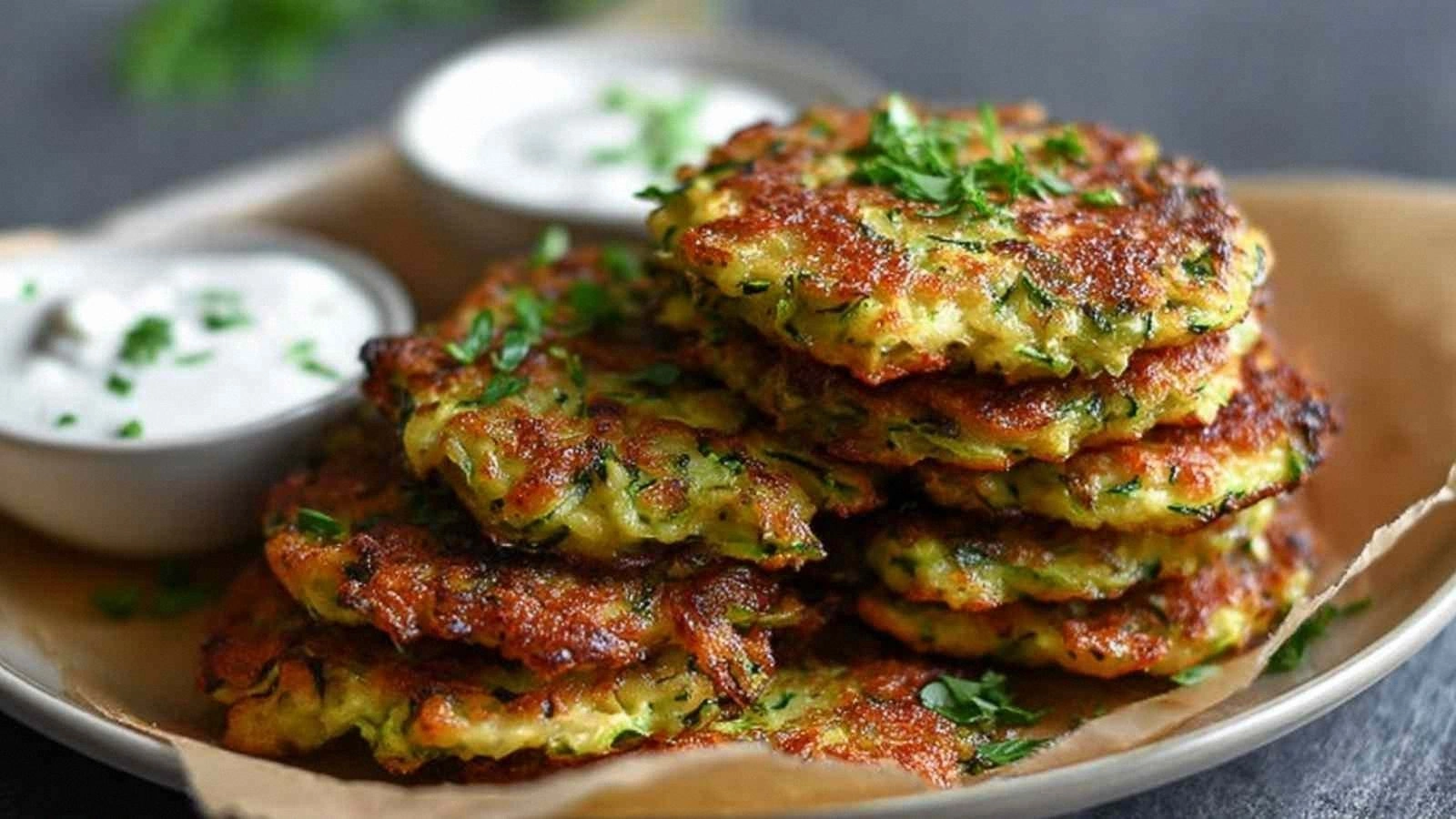
- Presentation: The golden color and the way the herbs peek through the crust make these fritters a visual treat, perfect for impressing guests.
- Balance: The recipe strikes a perfect balance between savory and creamy, with a hint of umami from the Parmesan that elevates every bite.
Alright, let’s break down exactly what goes into this masterpiece…
Inside the Ingredient List
The Flavor Base
At the heart of these fritters is the zucchini, the star that delivers a subtle sweetness and a hydrating bite. When you grate it, you’re coaxing out the natural sugars that caramelize beautifully when pan‑frying. If you skip the zucchini, you lose that fresh, green crunch that’s essential to the dish’s identity.
The Greek yogurt or cottage cheese acts as a creamy binder, adding protein and a tang that brightens the overall flavor profile. It keeps the batter from drying out, and its acidity balances the richness of the Parmesan. If you’re allergic to dairy, a non‑dairy yogurt can work, but be mindful that the texture may shift slightly.
The Parmesan cheese is the savory backbone. It melts into the batter, creating micro‑crusts that give the fritters a nutty, umami depth. A higher quality, freshly grated Parmesan will yield a more pronounced flavor. If you prefer a sharper taste, consider adding a pinch of nutritional yeast for a cheesy, slightly nutty finish.
The Texture Crew
Oat flour is the unsung hero that gives the batter its structure while keeping it gluten‑free and lightly nutty. It’s a great alternative to wheat flour, especially for those who want a lighter crumb. If you don’t have oat flour on hand, you can use almond flour for a slightly sweeter taste, but be prepared for a denser batter.
The eggs tie everything together, providing the necessary protein for the batter to hold its shape during cooking. Two large eggs are the sweet spot—too many eggs, and the fritters become rubbery; too few, and they fall apart. If you’re vegan, a flaxseed “egg” (1 tbsp ground flaxseed + 3 tbsp water) can work, but the texture will differ.
The olive oil, whether sprayed or drizzled, creates a crisp, golden crust and adds a subtle fruity note that pairs perfectly with the herbs. Spray the oil lightly to keep the fritters from becoming greasy. If you prefer a more pronounced olive flavor, use extra‑virgin oil for the final finish.
The Unexpected Star
Fresh herbs like parsley or dill bring a burst of green freshness that cuts through the richness of the cheese and yogurt. They add a bright, almost citrusy note that keeps the dish from feeling heavy. If you’re experimenting, try swapping parsley for basil or cilantro for a different aromatic profile.
Garlic, though only one clove, infuses a deep, savory aroma that lingers in the batter. It’s essential for depth, and its heat balances the mildness of the zucchini. Mince it finely to distribute the flavor evenly; a whole clove can be too overpowering.
Dried oregano or thyme provides a warm, earthy undertone. It’s a subtle backdrop that elevates the overall flavor profile. If you prefer a sweeter herb, consider using oregano. For a more robust flavor, thyme is the way to go.
The Final Flourish
Sea salt and black pepper are the final touches that bring everything together. The sea salt adds a mineral depth, while the pepper provides a gentle heat that awakens the palate. Use them sparingly; you’ll want to taste the ingredients, not mask them.
Everything’s prepped? Good. Let’s get into the real action…
The Method — Step by Step
- Begin by grating the zucchini on a box grater or using a food processor with a shredding blade. Squeeze the grated zucchini in a clean kitchen towel or cheesecloth to remove excess moisture—this step is crucial to prevent the batter from becoming too watery. You’ll want the zucchini to feel damp but not dripping. This ensures a crisp exterior and a moist interior. As you do this, you’ll hear a satisfying crunch that signals the beginning of the culinary adventure.
- In a large mixing bowl, combine the grated zucchini, Greek yogurt, and grated Parmesan. Stir until the mixture is uniform, and the cheese is evenly distributed. The yogurt should coat the zucchini fibers, creating a cohesive base. If the mixture feels too dry, add a splash of water or a bit more yogurt until it reaches a batter-like consistency.
- Add the eggs, minced garlic, sea salt, black pepper, oregano (or thyme), and chopped parsley or dill. Mix thoroughly, ensuring the herbs and spices are evenly dispersed. This is the moment where the aroma begins to dance—herbs, garlic, and Parmesan mingle in a fragrant symphony. The mixture should hold together when pressed between your fingers; if it’s too loose, add a pinch more oat flour.
- Heat a non‑stick skillet over medium‑high heat. Lightly spray or drizzle a tablespoon of olive oil, letting it shimmer across the surface. Once the oil is hot, use a tablespoon to drop scoops of batter into the pan. Don’t overcrowd the skillet; give each fritter room to spread and crisp. The sound of the batter hitting the pan should be a gentle sizzle—listen for it, it’s a cue that the heat is right.
- Cook the fritters for 3–4 minutes on the first side, until the edges start pulling away from the pan and the bottom turns a beautiful golden brown. Flip them carefully and cook for another 3–4 minutes on the other side. The interior should still be slightly moist, not dry. The smell of toasted Parmesan and herbs should fill the kitchen, making you crave more.
- Remove the fritters from the skillet and place them on a paper towel-lined plate to absorb excess oil. Let them rest for a minute or two; this allows the steam to escape and the crust to set. While they rest, you can prepare a quick sauce or a simple yogurt dip to accompany them.
- Serve the fritters hot, straight from the skillet, with a dollop of Greek yogurt mixed with a squeeze of lemon, or a drizzle of tahini sauce. The contrast of hot, crispy fritters with cool, creamy sauce creates a delightful textural experience. Garnish with extra parsley or a sprinkle of Parmesan for an extra touch of elegance.
- If you’re making a large batch, keep the cooked fritters warm in a low‑heat oven (around 200°F) while you finish cooking the rest. This ensures every fritter is served at the optimal temperature and texture. Remember, the moment you take them out of the skillet, the magic happens—the crust locks in, and the flavors meld.
That’s it — you did it. But hold on, I’ve got a few more tricks that will take this to another level. Keep reading to discover the insider knowledge that turns a good recipe into a masterpiece.
Insider Tricks for Flawless Results
The Temperature Rule Nobody Follows
The pan’s temperature is the secret weapon in achieving a crisp crust without over‑cooking the interior. Keep the heat at medium‑high; if it’s too low, the fritters will absorb too much oil and become greasy. If it’s too high, the outside will burn before the inside is cooked. I’ve found that a quick test—dropping a small droplet of batter into the pan—helps gauge the heat: if it sizzles immediately and starts to brown, you’re at the sweet spot.
Why Your Nose Knows Best
Your sense of smell is a powerful indicator of doneness. When the fritters begin to release a buttery, nutty aroma from the Parmesan, you’re close to perfection. The scent of fresh herbs and garlic will mingle, creating a fragrant cloud that signals the batter’s golden stage. Trust your nose; it’s the most reliable tool in the kitchen.
The 5-Minute Rest That Changes Everything
After cooking, let the fritters rest for 5 minutes on a wire rack or paper towel. This brief pause allows the steam to escape and the crust to firm up, preventing the interior from becoming soggy. I’ve seen people skip this step, only to end up with a mushy bite. Give them a minute to breathe, and the texture will be impeccable.
Use a Skillet with a Thick Base
A cast‑iron or heavy‑bottomed non‑stick pan distributes heat evenly, ensuring consistent browning. Thin pans can cause hot spots that burn the edges before the center cooks. If you’re in a pinch, a stainless steel pan will work, but preheat it thoroughly to avoid sticking.
Keep the Oil Light
Using a spray or a light drizzle of olive oil keeps the fritters from becoming greasy while still providing that necessary crispness. If you’re watching calories, you can replace olive oil with a non‑stick cooking spray. The key is to avoid excess oil, which will dilute the flavors.
Creative Twists and Variations
This recipe is a playground. Here are some of my favorite ways to switch things up:
Spicy Jalapeño Kick
Add finely diced jalapeño to the batter for a fiery twist. The heat pairs beautifully with the mild zucchini, creating a dynamic flavor profile that’s perfect for summer evenings.
Cheesy Cauliflower Blend
Replace half the zucchini with grated cauliflower for a lower-carb version. The cauliflower adds a subtle earthiness and keeps the batter light. It’s a great way to sneak in more veggies.
Herb‑Infused Tahini Dip
Serve the fritters with a tahini sauce mixed with lemon juice, garlic, and a splash of water. The creamy, nutty dip complements the crispy fritters and adds a Mediterranean flair.
Vegan Version
Swap the eggs for a flaxseed “egg” and use dairy‑free yogurt. The texture will be slightly different, but the flavor remains delicious. This version keeps the protein content high while staying plant‑based.
Smoky Chipotle Twist
Stir in a teaspoon of chipotle in adobo sauce for a smoky depth. The chipotle pairs wonderfully with the Parmesan, creating a complex flavor that’s both bold and comforting.
Sweet & Savory Mix
Add a tablespoon of finely chopped dried apricots to the batter. The natural sweetness balances the savory herbs and cheese, creating a delightful contrast that’s perfect for brunch.
Storing and Bringing It Back to Life
Fridge Storage
Store cooked fritters in an airtight container in the refrigerator for up to 3 days. The crust may soften slightly, but the flavor remains intact. When ready to serve, reheat them in a dry skillet over medium heat for 2 minutes on each side to restore crispness.
Freezer Friendly
For longer storage, place the fritters on a parchment‑lined tray and freeze them individually. Once frozen, transfer them to a freezer bag. They’ll stay fresh for up to 2 months. To reheat, place them directly from the freezer into a hot skillet; they’ll crisp up beautifully.
Best Reheating Method
The best way to revive frozen fritters is to bake them in a preheated oven at 375°F for 10 minutes, then finish in a skillet to crisp the edges. A quick splash of water before reheating steams the interior, keeping it moist while the exterior stays crunchy. This technique preserves the original texture and flavor profile.